Friday, May 21, 2010

How to Fill The Void in My Life After This Sunday

Your library blogger is already mourning the loss of her favorite television program, which will come to an end this Sunday night. If you too will be feeling "lost" soon, I have a literary-minded suggestion for how to fill the empty hours.

Squidoo.com has the Lost Book List, containing all the books shown or referenced during the series. This includes the titles featured on the shelf in the "hatch," and all of the books James "Sawyer" Ford, the castaways' most prolific bookworm, has been seen reading. (That alone would endear Sawyer to me, but the character also has a special place in this blogger's heart because the actor Josh Holloway grew up in Cherokee County and attended my high school. I didn't get to go to school with him, but I was in marching band with his little brother. Yep, and that is probably the closest brush I will ever have with celebrity. But I digress...)

My suggestion for Life after Lost: join the Lost Book Club! Check out the Lost book list, then come to the library and check out some of the books that have influenced and inspired the series' creators. Not only is it a way to fill the void Lost will leave in our hearts and minds, the books may even inform our understanding of the show. Just in case, you know, heaven forbid, they leave a few questions unanswered...

Tuesday, May 18, 2010

This date in history: Christopher Marlowe arrested!

On this date in 1593, it is believed an arrest warrant was issued for the playwright Christopher Marlowe. The charge was heresy. The accuser? fellow playwright Thomas Kyd. Kyd was arrested on May 15 on suspicion of treason. It is believed that Kyd, under torture, may have pointed the finger at former roommate Marlowe in order to save his own skin. Marlowe was arrested and made bail, but was killed (perhaps under suspicious circumstances) in a barroom brawl on May 30. It sort of places today's celebrity scandals in perspective, doesn't it?

I just had a nice chat with Reinhardt Theatre professor Kevin Crawford, who gave me a very favorable review of Contested Will: Who Wrote Shakespeare? by James Shapiro, which we have in our Leisure Reading section. I'm not a Shakespeare conspiracy theorist (except in fun: I'd love it if Marlowe turned out to have faked his death and written Shakespeare's plays for a dozen years, but I don't believe it). Dr. Crawford tells me that the history behind the Shakespeare conspiracy theories is as interesting as the conspiracy theories themselves. I certainly plan to check the book out for myself. Thanks for the recommendation, Dr. Crawford!

The picture for this blog post is Christopher Marlowe as Elvis in "Jailhouse Rock," which I made on faceinhole.com I may have had a little too much time on my hands today.

Friday, May 14, 2010

Library users: wouldja like to take a survey?


Hello! TGIF everybody!

I really appreciate the members of the Reinhardt community who read this blog or visit our Facebook page! You make it all worthwhile!

Today I am asking for your help. As some of you know, I am responsible for the serials department at the Hill Freeman Library. I'm the one who takes care of the print magazine, journal and newspaper subscriptions.

The new fiscal year is coming up, and I want to make the best possible use of our serials budget. We have been able to eliminate paying for many print subscriptions by finding databases that offer the publications online in full-text; this allows us to conserve our resources. Of course, there are still many periodicals that are only available to us in print format.

This is YOUR library, and I want to make sure I'm ordering the journals that you want and use. If there's a magazine we're getting that no one reads, I'd rather eliminate that subscription and put the money to better use elsewhere.

Please take a few minutes and respond to this survey about your magazine and journal use. If there's a title you'd like to see, please let me know!

Thanks for your help in making our library the best it can be! Help me spend our money. ;)

Thursday, May 13, 2010

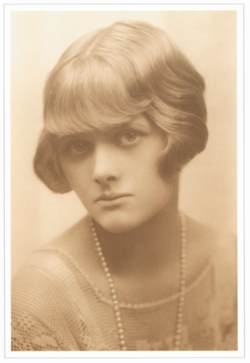
Happy Birthday Daphne du Maurier!


Lady Browning, better known as Daphne du Maurier, was born on May 13, 1907. Du Maurier wrote plays and works of nonfiction, but she was best known for her romantic suspense fiction, including my own guilty-pleasure favorite, the novel Rebecca, about a young bride whose husband's first wife (the titular character) died under mysterious circumstances. The movie adaptation of Rebecca was directed by Alfred Hitchcock, whose famous movie The Birds was based on a short story by du Maurier. Hitchcock's Rebecca won the 1941 Academy Award for Best Picture. (In my opinion, the film was inferior to the novel, primarily because of a change in the story that had me yelling at the TV when I watched the movie the first time. The Hill Freeman Library has the video if you'd like to see for yourself).

Du Maurier was created a Dame of the British Empire in 1969. She died in 1989, and her ashes were scattered in her beloved Cornwall, which was the setting for many of her works, including Rebecca.

Wednesday, May 12, 2010

Woof! Legendary Vince Dooley coming to Woodstock!


Thanks, Professor Smith, for the tip!

Legendary UGA football coach Vince Dooley will be in Cherokee County this Thursday! Dooley will be visiting Foxtale Book Shoppe in downtown Woodstock on Thursday, May 13, from 4 to 6 pm.

While he is beloved by Georgia football fans for his coaching career, Dooley has also gained renown as one of the region's finest gardeners (he was once in a UGA plant identification class with Reinhardt's own horticulture legend, Zach White, who has planted Vince Dooley hydrangeas in the shade garden at RU). At Foxtale, Dooley will be signing copies of his book Vince Dooley’s Garden: A Horticulture Journey of a Football Coach, as well as his other work Dooley's Playbook: The 34 Most Memorable Plays in Georgia Football History.

For more information, contact Foxtale Book Shoppe at (770) 516-9989.

Tuesday, May 11, 2010

Book Review: Orange is the New Black


Piper Kerman is an alumna of two somewhat exclusive, single-sex institutions, and received an education at each. The first is Smith College. The second is the federal correctional facilty in Danbury, Connecticut, and this experience is the subject of her memoir, Orange is the New Black: My Year in a Women's Prison, now available in our Leisure Reading section.

The first and obvious question, one asked of Kerman many times both during and after her incarceration: how did the “All-American Girl” (blonde, blue-eyed, privileged and educated) end up behind razor wire and heavy locked doors? As Kerman herself says in an interview with the Christian Science Monitor, she “went looking for trouble and found it.” After graduation from Smith with a theatre degree, Kerwin stayed in Northampton, Massachusetts, waiting tables and generally leading a bohemian existence. She meets and becomes romantically involved with Nora, a sophisticated older woman with a secret: she is in the employ of a West African drug kingpin. The younger woman is seduced by Nora’s glamorous lifestyle and easy money, and agrees once—just once—to help out by smuggling a suitcase full of drug money from Chicago to Brussels. After that mission, Kerman begins to feel that she’s gotten in over her head, breaks off the relationship, and starts a new life on the West Coast. With a new job and a new boyfriend, she believes she’s put the whole episode behind her for good—until there’s a knock at the door. Two U.S. Customs agents informed her she’d been indicted on charges of drug smuggling and money laundering.

As part of a plea bargain, Kerman pled guilty to money laundering and was sentenced to 15 months in federal prison. Her lawyer gave her this advice: “Don’t make any friends.” It was advice Kerman found difficult to follow. She was surprised by the unexpected kindness of her fellow inmates, who took her under their wing and showed her how to navigate the official and many unofficial rules of her incarceration. For example, one could ask how long someone’s sentence was, but one should never ask about the offense that led to someone’s arrest. Women of varying ages and races shared both personal goods (toothpaste, extra shower shoes) and advice (smuggle food out of the cafeteria in the front of one’s pants for clandestine cooking later). Danbury was no Club Fed—Kerman details the humiliating strip searches and the behavior of guards who were sometimes cruel and frequently incompetent. She admits that she had an easier time of it than most of her fellow prisoners; racism both subtle and overt abounded in the prison, and a blue-eyed blonde had certain advantages. Also, she had a loving fiancĂ©, a supportive family and a network of friends on the outside that visited regularly and sent her letters and books; many women had no such support system beyond the prison walls. Inside the prison, though, they formed a surrogate family and looked out for one another.

The book is, to be sure, a commentary on America’s war on drugs; Kerman is critical of mandatory minimum sentences for even minor, nonviolent offenses. She heartbreakingly tells of crying toddlers ripped from their mothers’ arms after visiting hours. Still, she doesn’t shy away from her own guilt. She admits her culpability and describes her shame when she met drug addicts in prison and realized she shared some responsibility for their plight. Kerman also raises concerns about the “corrections” system, which institutionalizes inmates and doesn’t prepare them for the realities of life after prison, so that recidivism is rampant.

The real heart of the book, though, is the resilience and compassion of the women she met at Danbury. Her “bunkies” Annette and Natalie, her prison mentor “Pop” and the others are characters as fascinating as any you could find in fiction, and one wishes to know what happened to them after their release. Kerman writes with wit, humor and sensitivity about a place and situation few of us will ever experience (and none of us wants to). The book reads like a novel, and can arouse laughter, anger and tears. It is a love letter both to her now-husband Larry, whose patient devotion is evident throughout, and to the women who became her prison “family.”

If anything, I felt Kerman gave short shrift to the story of her life before her arrest. Maybe she is still somewhat in the "don't ask/don't tell" prisoner's mindset, but I wanted to know more about how she became involved in criminal activity. I thought she rushed over that to get to the main topic of her incarceration. Perhaps a prequel is in the offing? Still, I really enjoyed this memoir, and hope to see more from Ms. Kerman in the future.

Orange is the New Black is available in our Leisure Reading section on the second floor of the library. You can visit the author’s website at piperkerman.com.

Monday, May 10, 2010

New book in our Leisure Reading section: Orange is the New Black


Piper Kerman is an alumna of two somewhat exclusive, single-sex institutions, and received an education at each. The first is Smith College. The second is the federal correctional facilty in Danbury, Connecticut, and this experience is the subject of her memoir, Orange is the New Black, now available in our Leisure Reading section.

The first and obvious question, one asked of Kerman many times both during and after her incarceration: how did the “All-American Girl” (blonde, blue-eyed, privileged and educated) end up behind razor wire and heavy locked doors? As Kerman herself says in an interview with the Christian Science Monitor, she “went looking for trouble and found it.”

After graduating from Smith with a theatre degree, Kerwin stayed in Northampton, Massachusetts, waiting tables and generally leading a bohemian existence. She met and became romantically involved with Nora, a sophisticated older woman with a secret: she is in the employ of a West African drug kingpin. The younger woman was seduced by Nora’s glamorous lifestyle and easy money, and agreed once—just once—to help out by smuggling a suitcase full of drug money from Chicago to Brussels. After that mission, feeling she'd gotten in over her head, Kerwin broke off the relationship and started a new life on the West Coast. With a new job and a new boyfriend, she believed she’d put the whole episode behind her for good—until she heard a knock at the door…

See tomorrow for the full review of Orange is the New Black by Piper Kerman!